Professional Exterior Detailing Services That Clean, Correct, and Protect Your Paint
A proper exterior detail is not a car wash. Pure Auto Care works through every stage — decontamination, correction, and protection — so your paint looks right and holds up long after the appointment is done.


86 Reviews
Why Choose Us
Exterior Detailing Done the Right Way — For Drivers Who Care About Their Paint
Pull a freshly washed car into direct sunlight and look at the paint at an angle. If you can see a web of fine circular marks, a haze that does not shift, or a surface that looks flat instead of deep — that car has not been properly detailed. It has been washed. Those are two very different things.
Exterior detailing is the full process: washing the surface, removing the contamination that bonding to the paint underneath, correcting the damage that has already built up in the clear coat, and applying a protective product that keeps the finish in that condition. Skip any one of those stages and the result deteriorates faster than it should.
At Pure Auto Care, we do not skip stages. Every exterior detail we carry out follows the correct sequence, with the right products and equipment at each step. The wash is a proper two-bucket hand wash, not a pressure rinse. Decontamination uses both chemical iron fallout treatment and a physical clay bar — because neither does the complete job on its own. Polishing is done by machine with compounds matched to your specific paint type and condition. Protection goes on over a properly prepared surface, which is the only way it performs the way it should.
The difference between a wash and a proper exterior detail is visible in the finish and
Essential Exterior Detail
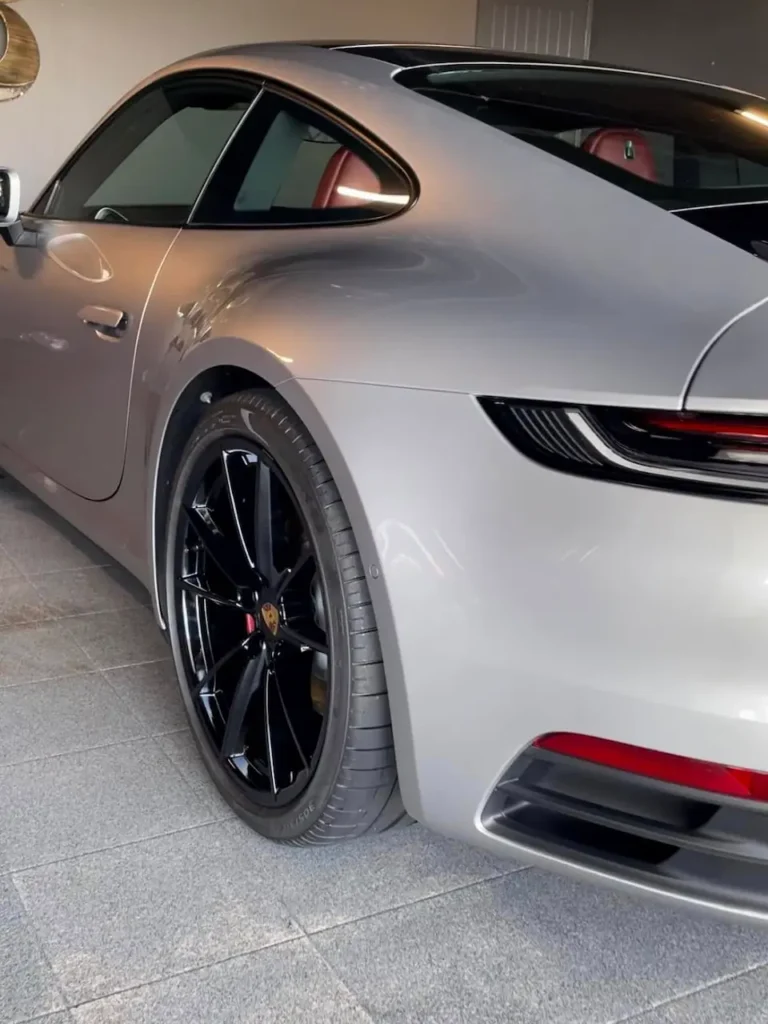
The Essential Detail is our entry-level exterior package — a thorough, paint-safe clean that leaves your car in noticeably better condition than any automated or drive-through wash can manage. It covers every exterior surface with correct technique and finishes with a spray wax that adds gloss and a short-term protective layer.
This package is well suited to drivers who maintain their car regularly and want a proper, careful clean between more intensive correction treatments.
EXTERIOR WASH & PROTECTION:
- Pre-rinse and foam cannon pre-soak
- Full two-bucket hand wash on all exterior panels
- Wheel faces, tyres, and arches cleaned and dressed
- Door jambs, shuts, and fuel cap recess wiped down
- Exterior glass cleaned front and rear
- Trim and plastic panels wiped and dressed
- Finishing spray wax applied across all painted panels
- Final wipe-down and visual inspection
Enhanced Exterior Detail
The Enhanced Detail adds a full decontamination stage and a durable synthetic sealant — the two steps that move exterior detailing from surface-level clean to genuine paint care.
After the initial wash, an iron fallout remover is applied to every panel to dissolve embedded metallic contamination. Clay bar treatment follows on every painted surface, pulling out the bonded particles that the chemical stage does not fully lift. The result is a paint surface that is genuinely smooth and clean at the clear coat level. Synthetic sealant applied over that surface bonds more effectively and holds longer than any product applied over contaminated paint.
Most drivers who experience this package for the first time notice the difference immediately — both in how the paint looks under light and how it feels when they run a hand across it.
DECONTAMINATION & SEALANT:
- Pre-rinse and foam cannon pre-soak
- Full two-bucket hand wash on all panels
- Iron fallout decontamination spray — full body treatment
- Clay bar surface decontamination on all painted panels
- Wheel faces, tyres, arches, and brake callipers cleaned and dressed
- Door jambs, shuts, and fuel cap recess detailed
- Exterior glass cleaned and treated for water repellency
- Trim and plastics restored and UV-protected
- Synthetic paint sealant applied by machine
- Final inspection under lighting
Premium Exterior Detail
The Premium Detail brings in a single-stage machine polish — the step that actually corrects light paint defects rather than just cleaning around them. If your paint looks dull or slightly hazy under direct light, swirl marks are almost certainly the cause. They scatter light instead of reflecting it cleanly. A single polishing stage removes light to moderate swirl marks and significantly improves the depth and clarity of your clear coat before protection goes on.
The package finishes with a high-grade carnauba and polymer wax blend applied by machine. This is a warmer, deeper gloss than a sealant alone — and because it goes over properly decontaminated and corrected paint, it holds up considerably longer than wax applied as a shortcut over an unprepped surface.
POLISH, WAX & FULL DETAIL:
- Pre-rinse and foam cannon pre-soak
- Full two-bucket hand wash
- Iron fallout treatment and clay bar decontamination on all panels
- Single-stage machine polish for swirl and haze removal
- IPA panel wipe post-polish
- Premium carnauba-polymer wax applied by machine
- Wheels, tyres, arches, and brake callipers fully detailed and dressed
- Door jambs, shuts, and engine bay edge cleaned
- Exterior glass cleaned, polished, and treated for water repellency
- Trim and plastics dressed and UV-protected
- Final multi-point inspection under lighting
Full Protection Exterior Detail
The Full Protection Detail is our most complete exterior treatment — full decontamination, two-stage paint correction, and a professional ceramic spray coating that delivers genuine semi-permanent protection over a properly corrected surface.
Where the Premium package addresses light defects with a single polish pass, this package runs two correction stages: a cutting compound to remove moderate swirl marks, water spot etching, and light scratches, followed by a refining polish to bring the surface to a high-gloss, optically clear finish. Every panel is checked under LED lighting between passes.
The ceramic spray coating applied at the end is not a wax or a conventional sealant. It bonds chemically to the clear coat and provides hydrophobic performance, UV resistance, and surface hardness that holds up across multiple seasons of Illinois driving. This is the right package before heading into winter, before listing a car for sale, or when you want the most durable result from a single appointment.
CORRECTION & CERAMIC PROTECTION:
- Pre-rinse, foam cannon pre-soak, and full two-bucket hand wash
- Iron fallout and tar spot decontamination
- Clay bar treatment across all painted panels
- Two-stage machine correction: cutting compound then refining polish
- IPA panel wipe and defect inspection under LED lighting
- Professional ceramic spray coating applied across all painted panels
- Wheels, callipers, tyres, and arches fully detailed and protected
- Door jambs, shuts, and fuel cap recess detailed
- Exterior glass cleaned, polished, and ceramic glass treatment applied
- Trim, plastics, and rubber seals cleaned and UV-sealed
- Final multi-point inspection
What Exterior Detailing Actually Involves — Stage by Stage
Exterior detailing has a sequence, and that sequence exists for a reason. Every stage prepares the surface for the next one. Done in the right order with the right products, the result is a finish that looks genuinely good and holds up over time. Done out of order, or with stages skipped, the result looks acceptable on the day and deteriorates within weeks.
Here is what each stage does and why it matters.
Wash and Pre-Soak
The detail starts with a foam cannon pre-soak — a thick layer of detailing shampoo applied to the entire car and left to dwell. This breaks down surface contamination before any contact is made with the paint, which matters because the leading cause of swirl marks is dragging fine grit across the surface with a wash mitt. By the time the mitt touches the panel, the heavy lifting has already been done chemically.
The wash itself uses the two-bucket method — one bucket for clean shampoo solution, one for rinsing the mitt between every panel. The mitt is never dragged across multiple panels without being rinsed. It sounds straightforward, but it is the standard that separates detailers who understand swirl prevention from those who create swirl marks while washing.
Decontamination
A freshly washed car still has contamination on it. Iron particles from brake dust embed into the surface of painted panels over weeks of driving — invisible to the eye but rough to the touch. Industrial fallout settles on bonnets and roofs. Tar spots bond to lower panels and sills. None of this is removed by shampoo.
Iron fallout remover dissolves the metallic contamination chemically. You can watch it work — the product turns purple as it reacts with embedded iron particles and breaks the bond between them and the paint. After it rinses away, clay bar treatment is worked panel by panel across the surface to lift any remaining bonded contamination. When the clay bar glides across a panel smoothly and the paint feels completely smooth under your fingers, the surface is genuinely clean at the clear coat level. That is the baseline that protection and correction need to work from.
Paint Correction (Package Dependent)
With a clean, decontaminated surface, you can see the paint clearly for the first time — and what you see is often a surface full of fine circular scratches, hazing, and dull areas caused by years of incorrect washing, automatic car washes, and wiping down a dry car with a cloth. This is swirl damage, and it lives inside the clear coat rather than on top of it. It does not wash off because it is not dirt.
Machine polishing removes a microscopic layer of clear coat to level the surface and eliminate the defects. A single polishing stage removes light to moderate swirl marks and improves overall gloss. A two-stage correction process uses a heavier cutting compound first to address more significant damage, followed by a finer finishing polish to refine the surface to full clarity. The difference in how the paint reflects light after a proper polish is immediate and significant.
Protection
The final stage is applying a protective product over the corrected, decontaminated surface. The key point here is preparation: a protection product applied over contaminated or damaged paint bonds poorly, performs below its rated capability, and wears off faster. The same product applied over a properly prepared surface bonds fully, performs as intended, and holds up through months of washing and weather.
Depending on the package, this stage involves a finishing spray wax, a synthetic polymer sealant, a carnauba-based wax, or a ceramic spray coating. Each has a different durability profile and serves a different purpose — the correct recommendation depends on how the car is used and what protection level makes sense for the driver.
What Damage Builds Up on Your Paint — And What Exterior Detailing Resolves
Understanding what is actually happening to your paint between details makes it easier to understand why each stage of the process exists.
Swirl Marks and Fine Scratches
The most common paint defect on any car that has been regularly washed. Swirl marks are caused by abrasive contact with the paint surface — automatic car wash brushes, incorrect hand washing technique, wiping a dusty car with a dry cloth, or using a rough towel to dry. They sit inside the clear coat and scatter light, which is why paint that looked fine in the car park looks full of circular marks under direct sunlight. Machine polishing removes them.
Water Spot Etching
Hard water minerals — from rain, sprinkler overspray, or car washes using unfiltered water — leave deposits on the paint surface when the water evaporates. Most water spots are harmless and wash off easily. The ones that sit on warm paint in direct sun for any length of time etch into the clear coat and cannot be removed by washing. They need machine polishing to level out.
Iron Contamination and Industrial Fallout
Brake dust is the primary source — iron particles thrown off the brake rotors during normal driving settle on every painted surface and embed over time. Industrial fallout from road grime and exhaust deposits adds to this layer. It is what makes paint feel rough after washing, and it is what creates a bond-resistant layer between the paint and any protective product applied on top. Iron fallout treatment and clay bar remove it.
Oxidation and UV Fade
UV radiation from the sun degrades clear coat polymer chains over time, leaving paint looking dull, chalky, or washed out. The process is slow but cumulative — cars parked outdoors in St. Charles through Illinois summers see this damage build up steadily over years. Machine polishing removes the degraded surface layer and restores colour depth. Protective coating applied afterwards slows the rate of future UV degradation.
Road Salt and Chemical Contamination
Illinois roads are heavily salted from late autumn through early spring. Salt residue bonds to paint and accelerates corrosion on unprotected surfaces. It also degrades rubber seals, trim, and wheel faces when left to accumulate. A proper chemical decontamination wash — not a rinse, a wash with appropriate decontamination products — is the correct response after winter driving, not just a standard shampoo.
How Exterior Detailing Connects to Paint Correction and Ceramic Coating
Exterior detailing, paint correction, and ceramic coating are three distinct services, but they sit in sequence — each one either depends on or prepares for the next.
Exterior detailing is the maintenance layer. It keeps the paint clean at a level that goes beyond a standard wash, maintains whatever protection is on the surface, and prevents contamination from accumulating to the point where correction becomes a bigger job. A driver who gets a proper exterior detail every few months keeps their paint in significantly better condition than one who only washes.
Paint correction is the restoration layer. It addresses damage that has already occurred inside the clear coat — swirl marks, oxidation, water spot etching, and fine scratches. It is not something that can be replaced by detailing, and it cannot be done effectively over contaminated paint. The decontamination work in a thorough exterior detail is always the first step before correction begins. Learn more about our paint correction packages.
Ceramic coating is the long-term protection layer. After the paint has been corrected, a ceramic coating bonds to the clear coat and provides durable hydrophobic protection, UV resistance, and hardness that holds up for years rather than months. It is not a substitute for the cleaning and correction stages — it is what goes on after those stages are completed correctly. Learn more about our ceramic coating packages.
The reason this sequence matters is simple: each stage performs better when the previous stage has been done properly. Coating over contaminated paint is coating that underperforms. Correcting paint without decontamination first leaves grit in the polishing process. Getting the order right is what produces a result that holds up.
Exterior Detailing Services We Offer in St. Charles, IL
Pure Auto Care carries all equipment, water, and products needed to complete a full exterior detail at your location. No facilities are needed on your end.
Services available:
- Essential Exterior Detail
- Enhanced Exterior Detail with decontamination and sealant
- Premium Exterior Detail with single-stage polish and carnauba wax
- Full Protection Detail with two-stage correction and ceramic spray coating
- Standalone clay bar and iron decontamination treatment
- Wheel, tyre, and arch deep clean
- Exterior glass polish and water-repellent treatment
- Trim restoration and UV protection
- Pre-sale vehicle presentation detail
- Pre-coating preparation detail prior to ceramic coating installation
Serving:
- St. Charles, IL
- Geneva, IL
- Batavia, IL
- Elgin, IL
- South Elgin, IL
- Wayne, IL
- North Aurora, IL
- DeKalb, IL
- Sycamore, IL
- Surrounding Kane and DeKalb County areas
Real Reviews from St. Charles Car Owners
Posted on GoogleTrustindex verifies that the original source of the review is Google. I highly recommend the team at PureAutoCare! Scheduling was easy, Christopher was prompt in his arrival and the work he did was IMPRESSIVE! I was actually very surprised as my jeep had gone 5 years without being detailed and I drove my German shepherd daily… so the buildup was a lot. I will use them again and highly recommend them. Thanks again, Christopher!Posted on GoogleTrustindex verifies that the original source of the review is Google. Pure Auto Care did a fantastic job with my interior detailing and completely eliminated all lingering odors using their ClO2 vapor treatment. They were incredibly thorough and took the time to ensure the cabin and vents were fully sanitized. Thanks to their hard work, my car feels and smells brand new again!Posted on GoogleTrustindex verifies that the original source of the review is Google. Had my car cleaned while at work. This was great. They were prompt, professional, and they did an amazing job. Love the scent too. Thanks.Posted on GoogleTrustindex verifies that the original source of the review is Google. Amazing job at a great pricePosted on GoogleTrustindex verifies that the original source of the review is Google. Great work at reasonable prices and they come out to you. What more can you ask for? I’ll definitely be calling them out every season !Posted on GoogleTrustindex verifies that the original source of the review is Google. They did a great job! I couldn’t believe it, especially with having a toddler, golden retriever and chihuahua.Posted on GoogleTrustindex verifies that the original source of the review is Google. Marco did a great job. Had my van’s interior detailed and he got rid of all signs of family, even dog hair. Conveniently done in driveway.Posted on GoogleTrustindex verifies that the original source of the review is Google. Recently had my Benz detailed and honestly way better than expected. Best detailers in st Charles and they showed up before the set time, were extremely professional and communicative. Service was great as I got the full detail service and vehicle looks brand new and very convenient as they are mobile.
Book Your Exterior Detail in St. Charles, IL Today
Whether your car needs a thorough clean and sealant, a full decontamination and polish, or a two-stage correction before a ceramic coating goes on — we will assess it honestly and recommend the package that makes sense for what you are starting with.
Pure Auto Care delivers professional exterior detailing across St. Charles and the surrounding area. Clear pricing, no upselling, and results that hold up. Book online or call to get your appointment scheduled.
Exterior Detailing FAQs
What is the difference between exterior detailing and a car wash?
A car wash removes loose surface dirt. Exterior detailing is a multi-stage process that goes significantly further — it removes bonded contamination through chemical treatment and clay bar, corrects paint defects through machine polishing where needed, and applies a protective product over a properly prepared surface. The result is cleaner, better-looking paint that holds up longer between treatments.
What does exterior detailing include?
The exact scope depends on the package, but every tier includes a proper hand wash, protective finishing product, wheels and tyres, door jambs, and exterior glass as standard. The Enhanced package adds full iron fallout and clay bar decontamination. The Premium package adds a single-stage machine polish and premium wax. The Full Protection package adds two-stage paint correction and a ceramic spray coating.
How long does an exterior detail take?
The Essential Detail takes around two to three hours on a standard vehicle. The Enhanced Detail runs three to four hours. The Premium Detail, which includes a polishing stage, typically takes four to six hours. The Full Protection Detail with two-stage correction runs six to eight hours depending on the vehicle’s size and paint condition.
Does my car need paint correction or just a detail?
If your paint looks hazy or has visible swirl marks under direct light, paint correction is the appropriate treatment. If your paint is in reasonable condition but needs thorough cleaning, decontamination, and protection, the Enhanced or Premium detail covers it. If you are unsure, we assess the paint condition before any work starts and give you a straight recommendation. We will not suggest correction work if the paint does not need it.
How often should exterior detailing be done?
For most drivers in St. Charles, two to three times a year is a practical schedule. A post-winter detail after the road salt season and a summer or autumn detail before the colder months covers the main maintenance intervals. If your car has ceramic coating applied, the intervals can extend because the coating keeps the paint cleaner between visits.
Will exterior detailing remove scratches?
Machine polishing removes swirl marks and fine scratches that sit within the clear coat layer. Deep scratches that have gone through the clear coat into the base coat or primer cannot be removed by polishing — they would need paint touch-up or respray work. We check this during the initial assessment and tell you clearly what the polishing stage can and cannot address on your specific vehicle.
Is the Full Protection Detail worth it before winter?
Yes, for most drivers. Illinois winters bring heavy road salt, freeze-thaw cycles, and conditions that accelerate paint damage on unprotected surfaces. Going into winter with a corrected and ceramic-coated surface means the salt and grime sit on top of the coating rather than bonding to the paint. Maintenance washing through winter is faster, the paint stays in better condition, and the spring post-winter detail is a significantly lighter job.