Professional Paint Correction Services That Restore Your Car's True Finish
Swirl marks, scratches, and dull paint don’t stand a chance. Pure Auto Care delivers machine polishing and multi-stage paint correction in St. Charles, IL — giving your clear coat the clarity and depth it had the day it left the showroom.




86 Reviews
Why Choose Us
Convenient Mobile Paint Correction for St. Charles Drivers
Your car’s paint tells a story. Road grime, automatic car washes, parking lot scuffs, and years of Illinois winters leave their mark — and once swirl marks and oxidation set in, no amount of washing brings that clarity back.
That’s where real paint correction comes in. Pure Auto Care brings professional-grade machine polishing directly to your driveway or office. No drop-offs, no waiting — just a certified detailer arriving fully equipped, ready to work through every blemish, haze, and scratch on your clear coat.
Whether you’re prepping your car for ceramic coating, getting it ready to sell, or simply want it looking the way it should, our paint correction service in St. Charles gives you results you can actually see. Depth. Gloss. Clarity. The kind that doesn’t wash off.
Stage 1 — Enhancement Polish
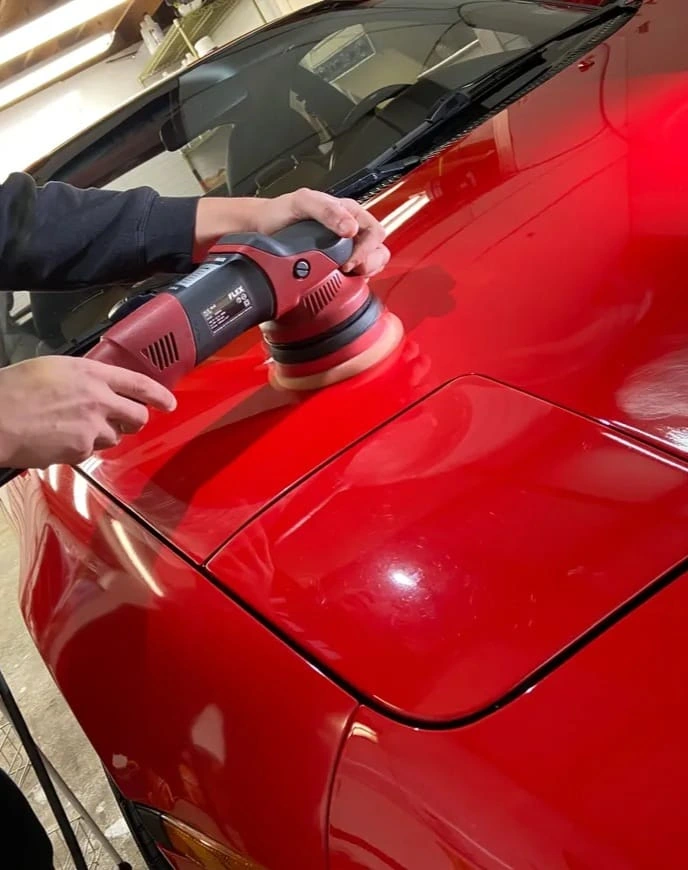
Description: Our single-stage enhancement polish is designed for vehicles with light surface imperfections — minor hazing, fine swirl marks, and dullness caused by regular driving. It’s not a full correction, but the difference is immediately visible. Paint that looked flat comes back to life with noticeably better gloss and depth.
This is the ideal entry point for newer vehicles or cars that simply need a refresh before a protective coating goes on.
What's Included — EXTERIOR PREP & POLISHING:
- Full hand wash + foam decontamination bath
- Iron fallout removal and tar spot treatment
- Clay bar decontamination for a clean bonding surface
- Single-stage machine polish (light to moderate defect removal)
- Panel wipe-down with IPA solution post-polish
- Wheels, arches, and glass cleaned and treated
Stage 2 — Full Paint Correction
This is where real transformation happens. Our two-stage paint correction process targets moderate to heavy swirl marks, random isolated deep scratches (RIDS), water spot etching, and oxidation that’s worked its way into the clear coat.
Stage 2 correction uses a combination of cutting and finishing compounds applied with dual-action or rotary polishers — matched to your paint type, hardness, and current condition. The result is a surface that reflects cleanly without distortion, haziness, or the cobwebbing you see under direct light.
If you’re planning to apply ceramic coating, Stage 2 correction is what makes the coating truly pop. A coated car with unresolved paint defects just locks in those flaws permanently.
What's Included — EXTERIOR PREP & CORRECTION:
- Full hand wash + two-bucket foam decontamination
- Iron contamination fallout treatment
- Clay bar surface decontamination (full panel)
- Multi-stage machine polish: cutting stage + refining stage
- Rotary and/or dual-action polisher used based on paint condition
- Panel inspection under LED lighting at each stage
- Full IPA panel wipe-down post-correction
- Wheels, glass, trim, and door jambs detailed and cleaned
Stage 3 — Concours Correction
For drivers who want every last defect removed — this is it. Our Stage 3 concours correction is a full multi-pass process that takes your paint as close to defect-free as possible. We’re talking about removing deep scratches, severe marring, heavy oxidation, and any previous polishing holograms left by poor machine work.
This level of correction takes the most time, the most passes, and the most precision — because the standard isn’t “better.” The standard is flawless.
Stage 3 is the recommended pre-treatment before any premium ceramic coating package or Paint Protection Film installation. When the paint surface is this clean, every protective layer that goes on top performs exactly as it should.
What's Included — FULL CORRECTION PROCESS:
- Deep decontamination wash: foam, fallout, clay bar
- Paint depth gauge measurement across all panels
- Full wet sanding prep where necessary (severe defects)
- Three-stage machine polishing: heavy cut, medium refine, ultra-fine finish
- Panel-by-panel inspection under specialist lighting at every stage
- Post-correction IPA wipe and optical clarity check
- Full exterior detail: wheels, arches, glass, trim, door jambs, and shutlines
What Paint Correction Actually Does — And Why It Matters
Most people see swirl marks in direct sunlight and assume it’s just surface dirt. It isn’t. Swirl marks, micro-scratches, and oxidation sit inside the clear coat — the transparent protective layer that gives your paint its gloss. Once that layer gets damaged, light scatters instead of reflecting cleanly, and the paint looks dull, hazy, or grey even after a fresh wash.
Paint correction is the process of mechanically removing a microscopic layer of clear coat to level the surface and eliminate those imperfections. Done right, it doesn’t thin your paint dangerously — it restores the surface to how it should look and feel.
At Pure Auto Care, we take paint correction seriously. Every car gets assessed first — we check paint depth across every panel so we know exactly how much correction room we’re working with. Then we match the correct machine, pad, and compound combination to your paint type. Soft European clear coats need a completely different approach to harder Japanese factory paint. Getting that wrong leaves holograms, buffer trails, or worse — burns through to primer.
This is skilled work. The results, when done properly, speak for themselves.
Is Your Car Ready for Paint Correction? Signs You Shouldn't Ignore
A lot of vehicles come to us with paint that’s been declining for years — slowly enough that owners barely noticed until they saw it under different lighting. Here are the things that tell us paint correction is overdue:
Swirl Marks and Cobwebbing
That circular scratching pattern you see in direct sunlight or under LED lighting is almost always caused by automatic car washes, improper hand washing technique, or wiping a dry car down with a cloth. It's the most common paint defect we deal with, and it responds very well to machine polishing.
Water Spot Etching
Hard water minerals — especially from sprinkler systems, car washes using unfiltered water, or rainfall sitting on hot paint — leave mineral deposits that etch into the clear coat. Some water spots wash off. The ones that don't need corrective polishing to remove.
Oxidation and Fading
Illinois sun does real damage to paint over time. UV radiation breaks down the clear coat's protective polymers, leaving paint looking chalky, faded, or washed out. Oxidation is more aggressive on older vehicles or cars that are parked outdoors year-round. Stage 2 or Stage 3 correction brings colour depth back.
Random Isolated Deep Scratches (RIDS)
Car park scrapes, key marks, branch scratches — these are isolated but often deep. Depending on whether they've penetrated through the clear coat to the base coat or primer, machine polishing can reduce or fully eliminate them.
Pre-Coating Preparation
If you're planning to get ceramic coating applied, your paint needs to be corrected first. Coating a car with existing swirl marks locks those defects under the coating permanently. Every ceramic package we offer at Pure Auto Care includes at minimum an enhancement polish — because protecting damaged paint defeats the purpose.
The Paint Correction Process at Pure Auto Care
No two cars arrive in the same condition. That’s why we don’t use a one-size approach. Here’s how we work through a standard correction job in St. Charles:
Step 1 — Initial Wash and Decontamination
Every correction starts with a thorough hand wash, foam bath, and iron fallout treatment. Road grime, embedded iron particles, and industrial fallout contaminate the surface and interfere with polishing if they're not removed first. Clay bar decontamination follows — pulling out bonded contaminants the wash can't touch.
Step 2 — Paint Depth Measurement
Before any machine touches your paint, we measure clear coat depth across every panel using a paint thickness gauge. This tells us how much correction room we have, which stages are appropriate, and whether any panel has had previous bodywork.
Step 3 — Machine Polishing
Depending on the correction stage booked, we work through the required number of polishing passes — starting with a heavier cutting compound to remove defects, then stepping down through finer grades to refine and finish the surface. We use a combination of dual-action and rotary polishers based on the defect type and paint hardness.
Step 4 — Panel Inspection
After each polishing stage, panels are checked under specialist LED lighting and a swirl finder lamp. We're looking for any remaining defects, polishing holograms, or areas that need a second pass. This step is where shortcuts show — and where we don't take them.
Step 5 — IPA Wipe-Down and Final Check
Once correction is complete, every panel gets wiped with an isopropyl alcohol solution. This strips any polishing oils left behind, revealing the true corrected finish and preparing the surface for any protective coating that's going on top.
Mobile Paint Correction Services We Offer in St. Charles, IL
Pure Auto Care is fully mobile — we come to you. Whether you’re at home in St. Charles, at your office in Geneva, or parked up in Batavia, we arrive with everything needed to complete a full paint correction job on-site. No drop-offs, no waiting rooms, no collecting your car from a shop.
Services available across St. Charles and surrounding areas:
- Stage 1 Enhancement Polish
- Stage 2 Full Paint Correction
- Stage 3 Concours-Level Correction
- Pre-coating paint correction (required for all ceramic packages)
- Swirl mark and fine scratch removal
- Water spot and mineral deposit treatment
- Oxidation removal and colour depth restoration
- Hologram and buffer trail correction (fixing poor previous polish work)
- Single-panel spot correction
Serving:
- St. Charles, IL
- Geneva, IL
- Batavia, IL
- Elgin, IL
- South Elgin, IL
- Wayne, IL
- DeKalb, IL
- Sycamore, IL
- And surrounding Kane & DeKalb County areas
- All services delivered mobile — fully equipped, right to your door.
Real Reviews from St. Charles Car Owners
Posted on Google
 Chelsie KlieseI highly recommend the team at PureAutoCare! Scheduling was easy, Christopher was prompt in his arrival and the work he did was IMPRESSIVE! I was actually very surprised as my jeep had gone 5 years without being detailed and I drove my German shepherd daily… so the buildup was a lot. I will use them again and highly recommend them. Thanks again, Christopher!Posted on Google
 Sri BayyaPure Auto Care did a fantastic job with my interior detailing and completely eliminated all lingering odors using their ClO2 vapor treatment. They were incredibly thorough and took the time to ensure the cabin and vents were fully sanitized. Thanks to their hard work, my car feels and smells brand new again!Posted on Google
 Shari HoviousHad my car cleaned while at work. This was great. They were prompt, professional, and they did an amazing job. Love the scent too. Thanks.Posted on Google
 EDWARD HANSONAmazing job at a great pricePosted on Google
 Michael LannersGreat work at reasonable prices and they come out to you. What more can you ask for? I’ll definitely be calling them out every season !Posted on Google
 Tricia HudspethThey did a great job! I couldn’t believe it, especially with having a toddler, golden retriever and chihuahua.Posted on Google
 Mark GordonMarco did a great job. Had my van’s interior detailed and he got rid of all signs of family, even dog hair. Conveniently done in driveway.Posted on Google
 Christopher LazoRecently had my Benz detailed and honestly way better than expected. Best detailers in st Charles and they showed up before the set time, were extremely professional and communicative. Service was great as I got the full detail service and vehicle looks brand new and very convenient as they are mobile.
Paint Correction, Ceramic Coating & Paint Protection Film for a Long-Lasting Shine
Want to bring back that showroom finish? Our professional paint correction in St. Charles, IL removes swirl marks, oxidation, and light scratches to restore your paint’s depth and clarity.
For long-term protection, we offer multiple solutions built for Illinois drivers. Ceramic coating bonds directly to your clear coat, creating a hydrophobic shield against UV rays, bird droppings, road salt, and harsh Midwest weather — keeping your car cleaner for longer. For maximum impact resistance, Paint Protection Film (PPF) guards high-vulnerability areas like your hood, bumpers, and fenders against rock chips and road debris.
These aren’t car wash add-ons. Paint correction, ceramic coating, and PPF are professional-grade treatments that protect your paint and maintain your vehicle’s resale value for years to come.
Book Your Paint Correction in St. Charles, IL Today
Ready to see what your car’s paint is actually supposed to look like? Pure Auto Care makes it straightforward — call or book online and we’ll come to you, fully equipped and ready to work.
Whether you drive a daily car, a weekend sports car, or a truck you take pride in, our certified detailers will assess your paint honestly and deliver correction results you can see in any light. St. Charles drivers trust Pure Auto Care because we don’t cut corners — on prep, on polishing stages, or on the final result.
Paint Correction FAQs
What is paint correction and how is it different from polishing?
Polishing is a broad term — it covers everything from a basic shine-up with a finishing polish to aggressive multi-stage defect removal. Paint correction specifically refers to the process of using machine polishing compounds to remove clear coat defects — swirl marks, scratches, oxidation, and water spot etching — by levelling the surface. It’s more precise, more involved, and requires measuring paint depth beforehand to ensure it’s done safely.
How long does paint correction take?
It depends on the size of the vehicle and the stage of correction needed. A single-stage enhancement polish on a standard saloon typically takes 4–6 hours. A full two-stage correction can run 8–12 hours. Concours-level multi-stage work on a larger vehicle can take 1–2 full days. We give you an honest time estimate after assessing your car’s condition.
Will paint correction remove all scratches?
Machine polishing removes defects that sit within the clear coat layer. If a scratch has gone through the clear coat into the base coat or primer, it can’t be polished out — it would need paint touch-up or respray work. We check this during our initial assessment and tell you upfront what correction can and can’t achieve on your specific vehicle.
Do you need to correct paint before ceramic coating?
Yes — always. Ceramic coating doesn’t hide paint defects. It locks them in permanently under a hard glass-like layer. Any swirl marks, scratches, or haze that exist before the coating goes on will be visible and fixed in place afterwards. At minimum, an enhancement polish should be completed before any coating application. We include this in all our ceramic coating packages.
How often should I get paint correction done?
Most drivers only need a full correction once every few years if they maintain their paint properly afterwards — especially with a ceramic coating applied. The key is changing washing habits to prevent reintroducing swirl marks. If you’re using touchless or two-bucket hand wash methods, a correction should last the life of whatever protection is applied on top.
Is paint correction safe for all vehicles?
Yes, when done properly. The critical step is measuring paint thickness before starting, so we know how much clear coat we’re working with. Vehicles that have had previous bodywork on certain panels may have thinner clear coat in those areas, which affects how aggressively we can correct. We adjust our approach panel by panel and never push past safe limits.